Quick answer
Nikkei food is the fusion of Japanese and Peruvian cuisine: Japanese technique (precise cuts, respect for the ingredient) plus Peruvian flavor (chili, lime, red onion). It was born in Peru starting in 1899 with Japanese immigration and is now one of the most beloved signature cuisines in the world.
Want to try it for real? At Oni Nikkei we make sushi in Medellín with that same Japanese-Peruvian root.
If you have ever tried a tiradito that tasted of Peru but had the cut and precision of a Japanese master, you already knew nikkei food without realizing it. It is one of the most fascinating fusion cuisines in the world: it was born from the encounter between two cultures that, at first glance, had nothing in common, and it ended up creating a language of flavors all its own, elegant and full of character.
In this guide we explain what nikkei food is, where it comes from, what its key dishes and ingredients are, and why it became so beloved.
What exactly is nikkei food?
Nikkei food is the fusion of Japanese and Peruvian cuisine. The term “nikkei” is used to refer to Japanese emigrants and their descendants who settled outside Japan, and in the culinary sense it points specifically to the Japanese community that arrived in Peru and adapted its cooking to local ingredients and flavors.
It is not simply “sushi with Peruvian touches” or “ceviche with soy sauce”. It is a cuisine with its own identity, where Japanese technique (the precision of the cut, the respect for fresh ingredients, the pursuit of balance) meets the power of Peruvian flavor: chili, lime, red onion, cilantro. The result is something that exists neither in Japan nor in traditional Peru: a third path.
Where does the Japanese-Peruvian origin come from?
The story begins at the end of the 19th century. Starting in 1899, thousands of Japanese emigrated to Peru looking for work, mostly in the countryside and in the coastal cities. Over time, many opened eateries and restaurants, and that is where the magic happened: the Japanese cooks had their technique and their palate, but they did not always find the ingredients from home. So they improvised with what was available in the Peruvian markets.
A Japanese cook used to curing fish with precision came across Peruvian lime, aji amarillo, and rocoto, and began to reinterpret ceviche. Instead of leaving the fish marinating for hours, he applied the Japanese logic of freshness and clean cutting, and a lighter, more direct version was born. From that constant dialogue, repeated over generations, nikkei cuisine emerged as we know it today.
A cuisine that took time to get a name
For decades, this fusion simply existed in the kitchens of Japanese-Peruvian families without a label. Only in the last decades of the 20th century, when Peruvian gastronomy began to gain international prestige, was nikkei cuisine recognized as a style with a name of its own. Today it is one of the great sources of pride of Latin American gastronomy and is served in high-end restaurants around the world.
The dishes that define nikkei cuisine
If you want to understand nikkei food, the best way is to get to know its signature dishes. Each one shows how the two traditions cross paths:
- Tiradito. It is perhaps the quintessential nikkei dish. Raw fish cut into thin slices (in the style of Japanese sashimi) but bathed in a Peruvian-inspired sauce with lime, chili, and sometimes leche de tigre. Without onion, unlike ceviche, so the cut can shine.
- Nikkei ceviche. The classic Peruvian ceviche, but touched up with Japanese notes: a hint of soy sauce, a little ginger, sesame oil, or nori seaweed. It keeps the acidic freshness of the original with an extra layer of umami.
- Signature nigiri. Bites of rice with fish that respect the Japanese form, but finished with Peruvian ingredients: a touch of chili, a citrus reduction, a flame-searing that adds smokiness.
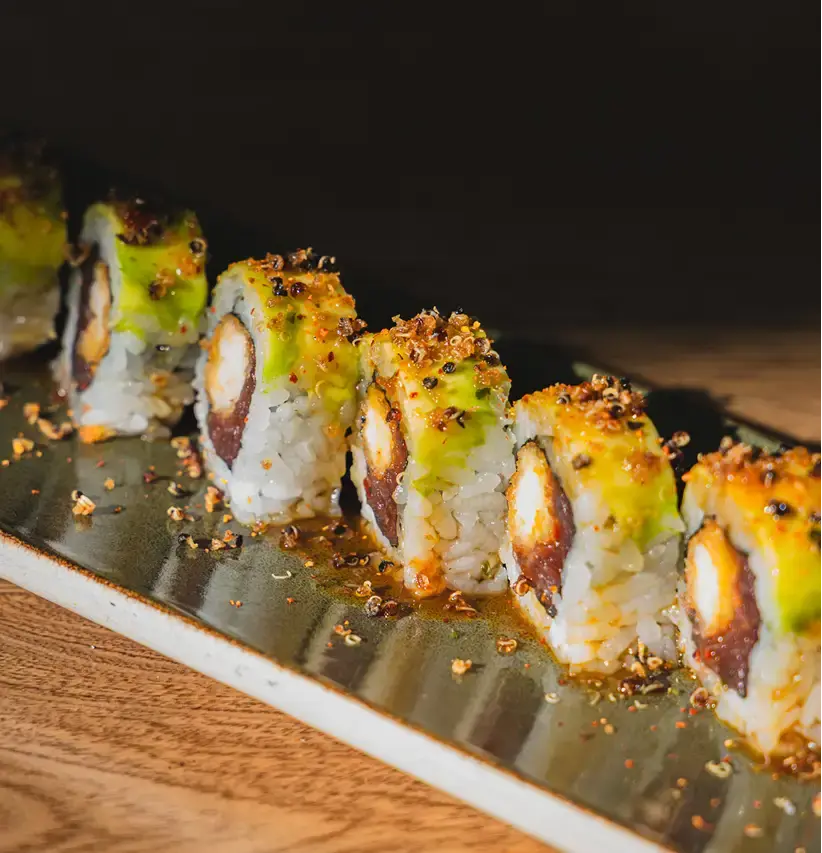
- Fusion makis and rolls. The rolls where rice and seaweed combine with fillings and sauces that play with the sweet, the acidic, and the spicy of the Peruvian pantry.
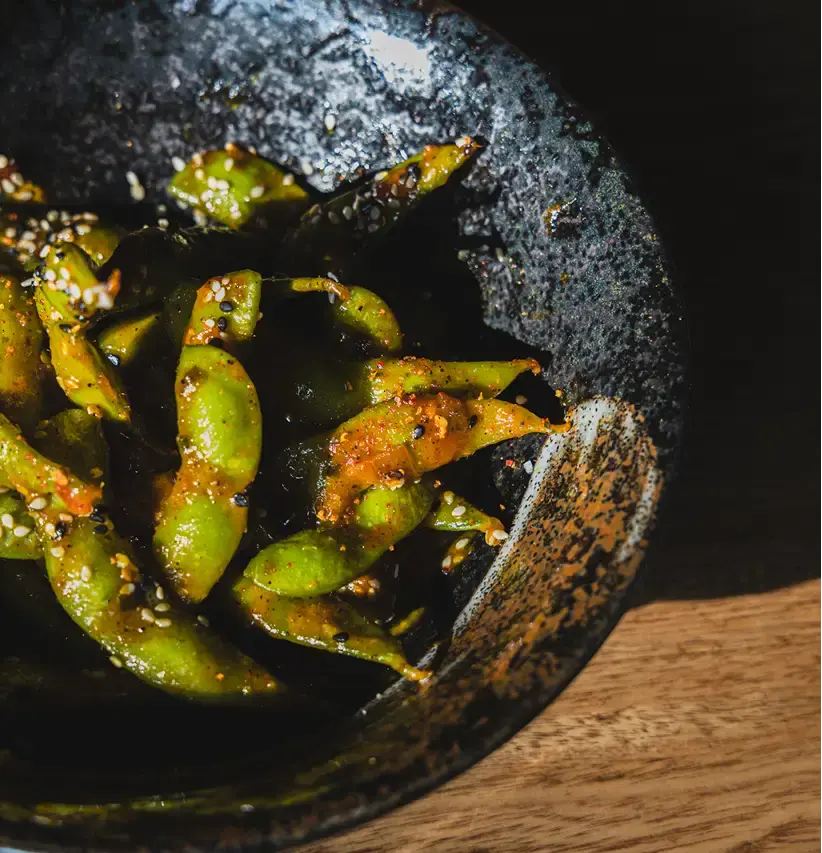
- Gyozas and hot dishes. Japanese dumplings and stir-fries that incorporate chili, huacatay, or other Andean flavors.
Japanese cuisine is the tradition of Japan; nikkei is what happened when that technique was adapted to Peruvian ingredients. They share a respect for the ingredient, but nikkei has its own identity marked by chili and lime.
The key ingredients of nikkei food
The nikkei pantry is what makes this fusion possible. From the Japanese side come soy sauce, wasabi, ginger, nori seaweed, vinegared rice, sesame, and dashi. From the Peruvian side come aji amarillo, rocoto, lime, red onion, cilantro, huacatay, and corn.
Fresh fish and seafood are at the heart of almost everything: tuna, salmon, corvina, octopus, prawns. And above the ingredients stands the philosophy: absolute respect for the ingredient, precise cuts, and a constant pursuit of balance between the acidic, the salty, the umami, and the spicy. That is the nikkei signature.
Try the Japanese-Peruvian fusion at Oni
Fresh ingredients, Japanese technique, and flavors that are not afraid of Peruvian character, in El Poblado.
Book your tableWhy did nikkei food win over so many palates?
Nikkei cuisine has something that makes it universal: it is sophisticated without being solemn and flavorful without being heavy. Japanese technique brings finesse and presentation; Peruvian flavor brings joy and power. It is a combination that works both for a special dinner and for a night out with friends.
On top of that, it fits perfectly with current trends: fresh dishes, portions to share, an emphasis on the ingredient and the experience. It is no coincidence that in cities like Medellin the nikkei offering has grown so much in recent years. It is a cuisine that invites you to explore, to try new things, and to be surprised with every bite.
Frequently asked questions
Is nikkei food the same as Japanese food?
No. Japanese food is the culinary tradition of Japan; nikkei food is the fusion that emerged when Japanese emigrants in Peru adapted their cooking to Peruvian ingredients and flavors. They share technique and respect for the ingredient, but nikkei has its own identity marked by chili, lime, and other Peruvian ingredients.
Is all nikkei food raw or spicy?
Not necessarily. Although many signature dishes (tiradito, nikkei ceviche, nigiri) are based on raw or marinated fish, there are also hot preparations such as gyozas, stir-fries, and cooked dishes. Spice is usually present due to the use of chili, but you can almost always adjust the intensity.
What is the difference between a tiradito and a ceviche?
Ceviche uses the fish in chunks, with red onion and plenty of lime, marinated for a few minutes. The tiradito, on the other hand, cuts the fish into thin slices in the Japanese style, has no onion, and is bathed in a more elaborate sauce right when served. The tiradito is one of the most representative creations of nikkei cuisine.
Where can I try good nikkei food in Medellin?
At Oni Nikkei, in El Poblado, we make signature nikkei cuisine: sushi, tiraditos, flame-seared nigiri, and rolls with that Japanese-Peruvian fusion. You can book your table online and live the full experience.
In short
- Nikkei food is the fusion of Japanese technique and Peruvian flavor.
- It was born in Peru starting in 1899 and is now a recognized signature cuisine.
- Its key dishes: tiradito, nikkei ceviche, signature nigiri, and fusion rolls.
- Its signature is the balance between the acidic, the salty, the umami, and the spicy.