
Quick answer
Japanese food is much more than sushi: ramen, gyoza, tempura, katsu, donburi, yakitori and udon are the heart of its everyday cooking. Each dish follows its own logic of broth, frying, charcoal or rice, and understanding it helps you order better.
Want to start with the classics? At Oni Nikkei we make sushi in Medellín and dishes with Japanese roots and our own stamp in El Poblado.
When someone says “let’s go eat Japanese”, they almost always think of sushi. And it makes sense: it was the first dish to cross borders. But Japanese cuisine is a far wider universe, with broths that simmer for hours, light fried dishes, charcoal grills and rice bowls that people eat every day in any city in Japan.
In this guide we go through the typical Japanese dishes that are worth trying, what sets them apart and in what order it makes sense to discover them if you are just getting started.
What defines Japanese food?
Before the dishes, it helps to understand the logic. Japanese cooking is built on three ideas: respect for seasonal produce, techniques that aim to highlight the ingredient instead of disguising it, and umami, that deep, savory taste brought by soy sauce, miso, kombu seaweed and dried bonito flakes.
From there comes dashi, a mild broth made with kombu and bonito that works as the base for soups, sauces and stews. If you notice that many Japanese dishes share a recognizable background flavor, it is almost always dashi working underneath.
The typical dishes you have to try
This is the selection we recommend to anyone who wants to really get to know Japanese cooking, not just its most famous face.
Ramen
The comfort dish par excellence. A long-simmered broth (pork, chicken, miso or soy) with wheat noodles, topped with chashu pork, marinated egg, spring onion, nori seaweed and bamboo shoots. The key is the broth: a good ramen simmers for hours and its texture feels dense on the palate. It is eaten with the noodles hot and without shyness: slurping is part of the ritual.
Gyoza
Little dumplings filled with pork and cabbage, seared in the pan on one side until crisp and finished with steam. That double texture (golden base, juicy body) is what makes them addictive. They are dipped in a soy sauce with rice vinegar and sesame oil.
Tempura
Japanese frying by definition: shrimp, fish or vegetables coated in a very light batter of flour and ice-cold water, fried fast so they come out crisp and not at all greasy. A well-made tempura crunches when you bite it and still lets you see the ingredient inside. It comes with tentsuyu, a light sauce of dashi and soy.
Katsu
A cut of pork (tonkatsu) or chicken (chicken katsu) breaded with panko, that Japanese breadcrumb with large flakes that gives an unmistakable crunch. It is served in strips with fresh cabbage and katsu sauce, sweet and sour and thick. When it goes over rice with egg and onion, it becomes katsudon.
Donburi
The category of rice bowl dishes. Over a base of Japanese rice go proteins and sauces: gyudon (beef), oyakodon (chicken and egg), unadon (glazed eel) or kaisendon (raw fish). This is everyday Japanese food: fast, complete and balanced.
Yakitori and robatayaki
Charcoal and embers. Yakitori are chicken skewers (every part of the bird, not just the breast) glazed with tare, a sweet soy sauce. Robatayaki takes the same idea to seafood, meats and vegetables cooked slowly over charcoal. It is the most social side of Japanese cooking: made for sharing and pairing with a drink.
Udon and soba
The other noodles. Udon is thick, white and soft, served in hot broth or cold with the sauce on the side. Soba is made with buckwheat flour, has a darker color and a nutty flavor; in summer it is eaten cold with tsuyu sauce. Both are simple dishes where the texture of the noodle is everything.
In Japan sushi is associated more with a special night out than with an everyday lunch. What is everyday are ramen, donburi, Japanese curry or a katsu set. So if you want to understand that cuisine, it is worth stepping outside sushi and trying the rest of the menu.
How do the best known Japanese dishes compare?
Each dish answers to a different technique and a different moment. This table helps you get your bearings before ordering.
| Dish | Base | Technique | Ideal for |
|---|---|---|---|
| Ramen | Broth and wheat noodles | Long simmering | A hearty meal |
| Gyoza | Filled dough | Searing and steaming | A starter to share |
| Tempura | Flour and ice-cold water | Fast frying | Something light to nibble |
| Katsu | Panko | Breading and frying | A classic main dish |
| Donburi | Japanese rice | Assembled over rice | A complete, quick meal |
| Yakitori | Skewers | Charcoal grill | A long night with drinks |
And where does nikkei cuisine come in?
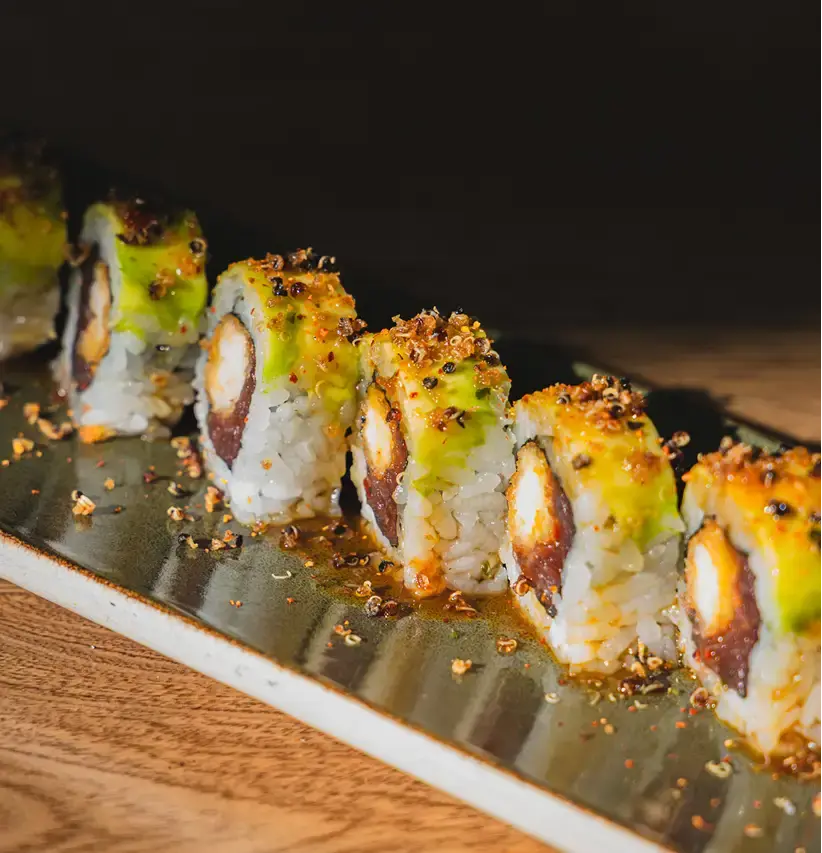
Nikkei cuisine was born when the Japanese community that migrated to Peru adapted its technique to local ingredients: yellow chili, lime, rocoto, red onion. The result is neither Japanese food nor Peruvian food: it is a third path with Japanese precision and Peruvian intensity.
That means many Japanese dishes have their nikkei version: tiraditos that dialogue with sashimi, chaufa rice that reinterprets fried rice, or grills that add chilies to the tare sauce. If you already know the Japanese classics, the nikkei route is the natural next step.
Try Japanese cooking with a nikkei accent
Signature sushi, robatayaki grills and dishes that cross Japan with Peru, in El Poblado, Medellin.
Book your tableIn what order should you try Japanese food?
- Start with the crisp Gyoza or tempura as a starter. They are easy to share and prepare the palate without filling you up.
- Follow with something raw A few pieces of nigiri, sashimi or a nikkei tiradito to appreciate the quality of the fish before the strong flavors.
- Go for the main dish A ramen, a donburi or a katsu depending on how hungry you are. This is where the meal is decided.
- Close with the grill Yakitori or robatayaki skewers to share while the table stretches out.
Frequently asked questions
What is the most typical dish in Japanese food?
It depends on what you call typical. Sushi is the best known outside Japan, but inside the country ramen and rice bowl dishes (donburi) are far more everyday. If you are looking for the dish people eat most often, ramen and donburi win; if you are looking for the most emblematic one internationally, it is sushi.
Is Japanese food always based on raw fish?
No. A large part of Japanese cooking is cooked: broths like ramen, fried dishes like tempura and katsu, grills like yakitori and stews with dashi and miso. Raw fish shows up mainly in sushi and sashimi, but that is only one slice of the repertoire. There are plenty of options for anyone who prefers not to eat raw fish.
What is the difference between Japanese food and nikkei food?
Japanese food leans on the canon of ingredients and techniques from Japan. Nikkei food was born from Japanese migration to Peru and applies that technique to Peruvian products such as yellow chili, lime and rocoto. They share precision and respect for the product, but nikkei has a more acidic and spicy profile.
Where can I try good Japanese and nikkei food in Medellin?
At Oni Nikkei, in El Poblado, we work Japanese technique with a nikkei accent: signature sushi, robatayaki grills, tiraditos and dishes that cross Japan with Peru. You can book your table online and build your route from the starters all the way to the grill.
In short
- Japanese food goes far beyond sushi.
- Ramen, gyoza, tempura, katsu, donburi, yakitori and udon are the essentials.
- Dashi and umami are the thread connecting almost every dish.
- Nikkei cuisine is the next step once you know the classics.