
Quick answer
The main types of sushi are maki (a roll with seaweed on the outside), uramaki (an inside-out roll, rice on the outside), nigiri (pressed rice with fish on top), temaki (a cone), and gunkan (a little rice boat). Sashimi (raw fish without rice) is not technically sushi.
Want to try them all? At Oni Nikkei we make sushi in Medellín with Japanese technique and a nikkei touch in every piece.
Opening a sushi menu for the first time can feel like reading another language: maki, nigiri, uramaki, sashimi, temaki, gunkan. They sound similar, but each one is a different preparation, with its own shape, texture, and way of being enjoyed. Understanding the types of sushi does not just help you order better: it lets you build a more complete experience and make the most of the table.
In this guide we explain, without unnecessary jargon, what the main types of sushi are and how to tell them apart.
What is sushi? First, the basics
Before the types, let’s clear up the concept. Sushi is not “raw fish” (that is sashimi, which we will see further down). Sushi is, in essence, vinegared rice (called shari) combined with other ingredients: fish, seafood, vegetables, seaweed. That base of seasoned rice is what technically defines sushi.
That is why there is sushi with raw fish, with cooked fish, with vegetables, or even vegetarian. What changes from one type to another is how that combination is put together: rolled, hand-pressed, in a cone, wrapped in seaweed. Let’s go one by one.
Maki: the classic roll
The maki is probably the first thing that comes to mind when you think of sushi. It is the classic cylindrical roll: a sheet of nori seaweed on the outside, the rice inside, and, in the center, the filling (fish, vegetables, sauces). It is cut into several pieces of the same size.
Within maki there are variants depending on the thickness:
- Hosomaki. The thin roll, with a single ingredient in the center and the seaweed on the outside. Simple and direct.
- Futomaki. The thick roll, with several fillings and more volume. Ideal for sharing.
The maki is versatile, easy to eat, and perfect for anyone starting to explore the world of sushi.
Uramaki: the inside-out roll
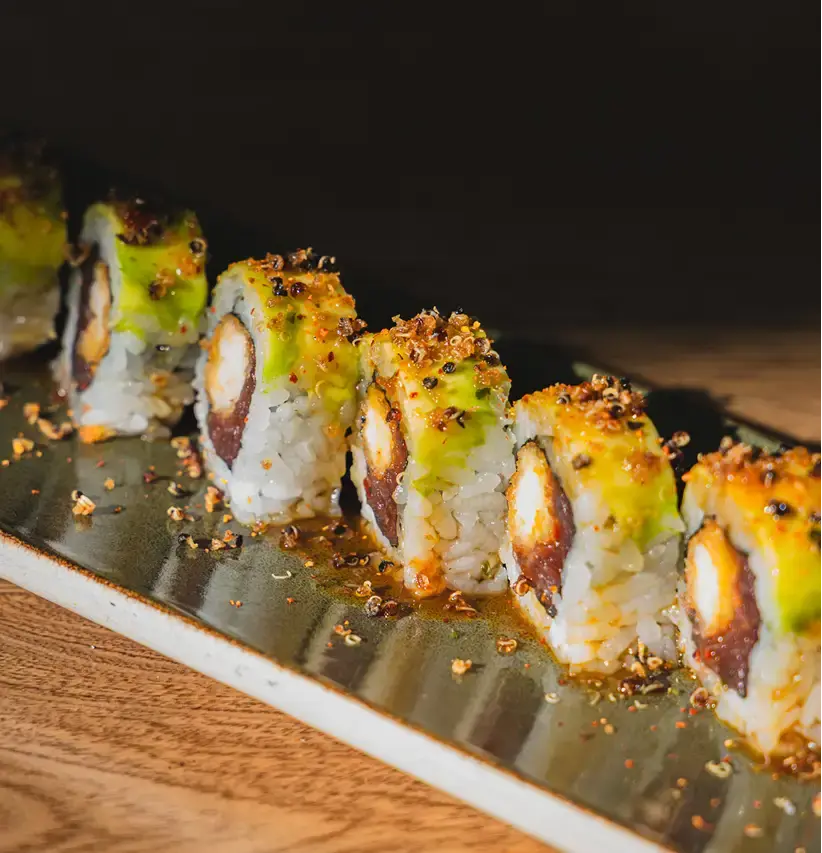
The uramaki is an inverted maki: the rice ends up on the outside and the nori seaweed on the inside, wrapping the filling. On the outside it usually carries sesame, fish roe (tobiko), or other toppings that give it texture and color.
The uramaki is the format of many famous rolls, such as the California roll, and it is where creativity takes off: sauces, flame-searing, crunchy ingredients. In nikkei and signature cuisine, the uramaki is the favorite canvas for playing with flavors. If you like rolls with character, book your table at Oni and try our versions with citrus touches and flame-searing.
Nigiri: the essential bite
The nigiri is pure balance between rice and ingredient. It consists of a small portion of hand-pressed rice, topped with a slice of fish or seafood. Sometimes it carries a dab of wasabi between the rice and the fish, and in some versions a thin strip of seaweed that holds the whole thing together.
It is one of the formats that most reveals the quality of a restaurant: with only two ingredients (rice and fish), there is nowhere to hide. A good nigiri depends on the precise cut, the freshness of the ingredient, and the exact point of the rice. In the nikkei offering, the nigiri is usually finished with touches such as a flame-searing or a citrus reduction that elevate the bite.
Sashimi: the one that is not technically sushi
Here comes the detail that surprises many people: sashimi is not sushi. Sashimi is slices of raw fish or seafood, cut with precision and served on their own, without rice. Since sushi is defined by the vinegared rice, sashimi falls outside that category, even though it is served in the same restaurants.
Sashimi is the ultimate expression of respect for the ingredient: there is nothing to distract from the flavor and texture of the fish. That is why it is usually enjoyed at the start of the meal, with a clean palate, and accompanied by just a little soy sauce, wasabi, or ginger.
Sushi is defined by the vinegared rice, not by the raw fish. There is cooked sushi, vegetarian sushi, or sushi with seafood. And sashimi, although delicious and very Japanese, is not sushi because it has no rice.
Temaki: the cone to eat with your hand
The temaki is a cone of nori seaweed filled with rice, fish, and vegetables. It is eaten with your hand, right away, while the seaweed is still crunchy. Its cone shape makes it informal and fun, perfect for a more relaxed experience.
The trick with the temaki is to eat it fresh: if you wait too long, the seaweed absorbs moisture from the rice and loses that crunchy contrast that makes it special.
Gunkan: the little rice boat
The gunkan (which means “battleship” because of its shape) is a base of rice surrounded by a strip of nori seaweed that sticks up like a wall, creating a small container. That hollow is filled with loose ingredients that could not be placed on a regular nigiri: fish roe, tartare, creamy mixes.
It is the ideal format for delicate or loose-textured ingredients, and it adds visual and flavor variety to any sushi platter.
How to build your order with all these types?
Now that you know the types, a good order combines formats so you don’t tire the palate:
- Start light Begin with sashimi or nigiri, when the palate is fresh and can appreciate the ingredient in its purest form.
- Add variety Add a couple of makis or uramakis to share: they combine several ingredients in a single bite and bring play to the table.
- Add texture Include a crunchy temaki or a different gunkan to change the sensation and add contrast.
- Close with the intense Finish with flame-seared rolls or the ones with more powerful flavors, which make the ending more memorable.
With that logic, every bite brings something new and the meal feels like an experience, not a repeated dish.
Build your sushi platter at Oni
Makis, uramakis, nigiri, sashimi, and signature creations with the nikkei stamp, in El Poblado.
Book your tableFrequently asked questions
What is the difference between maki and uramaki?
In maki, the nori seaweed goes on the outside and the rice inside. In uramaki it is the opposite: the rice ends up on the outside (often with sesame or toppings) and the seaweed wraps the filling on the inside. The California roll is the best-known uramaki.
Is sashimi a type of sushi?
Technically no. Sushi is defined by the vinegared rice, and sashimi is just raw fish or seafood in slices, served without rice. It is served in the same restaurants and is often confused, but they are different preparations.
What type of sushi is best to start with if I have never tried it?
Maki and uramaki are usually the friendliest to start with, because they combine several ingredients and flavors in a single bite. If you prefer something more direct, nigiri of mild fish such as salmon is an excellent entry point.
Where can I try all these types of sushi in Medellin?
At Oni Nikkei, in El Poblado, you will find makis, uramakis, nigiri, sashimi, and signature creations with the nikkei touch. You can book your table online and order a varied selection to try a bit of everything.
In short
- Sushi is defined by the vinegared rice, not by the raw fish.
- Maki, uramaki, nigiri, temaki, and gunkan are the main formats.
- Sashimi is not sushi because it is served without rice.
- A good order combines formats: from the light to the intense.